We earn a commission if you buy through links on this page, at no extra cost to you. It never changes what we recommend. How we make money.
The short answer
- Often yes, but get your landlord's written permission first, because a thermostat is wired into the building's heating and cooling.
- Most smart thermostats need a 24V HVAC system; many work best with a C-wire, and some include an adapter if you don't have one.
- Electric baseboard heat runs on line voltage and needs a line-voltage thermostat such as Mysa.
- Keep your old thermostat and reinstall it when you move out.
Our picks
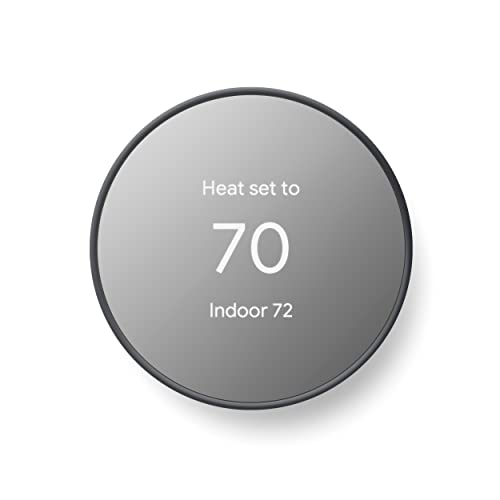
Google Nest Thermostat
Google's simpler Nest model, built to work in many homes without a C-wire, with app control and scheduling through Google Home.
Good
- Designed to run without a C-wire in many systems
- Simple app setup in Google Home
- Compatibility checker before you buy
Watch for
- Some systems still need a Nest Power Connector or C-wire
- Not for line-voltage baseboard heat

ecobee Smart Thermostat Essential
ecobee's entry thermostat, which supports a Power Extender Kit for 24V systems that don't have a common wire.
Good
- Works with the ecobee Power Extender Kit
- Works with major voice assistants
- Clear app and scheduling
Watch for
- Kit installs near the HVAC equipment, which you may not be able to access
- Not for line-voltage baseboard heat
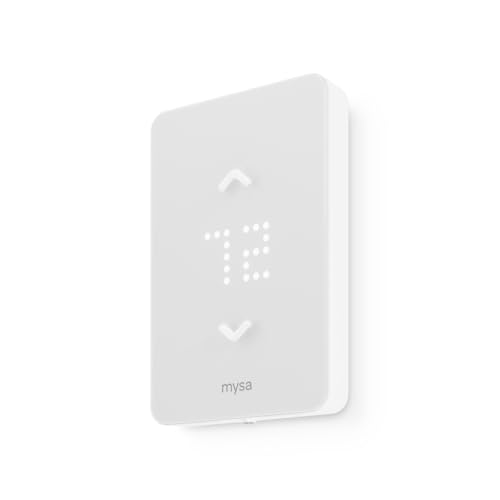
Mysa Smart Thermostat for Electric Baseboard Heaters
A line-voltage smart thermostat made for electric baseboard and convector heaters, which ordinary 24V smart thermostats can't control.
Good
- Made for 120V/240V electric baseboard heat
- App control and scheduling
- One thermostat per heater zone
Watch for
- Needs an electrician in most rentals
- Not for central forced-air systems
| Product | Best for | How it installs |
|---|---|---|
| Google Nest Thermostat | Best for most apartments | Use Google's online compatibility checker with a photo of your wiring before buying. |
| ecobee Smart Thermostat Essential | Best if you have no C-wire | The Power Extender Kit installs at the furnace, so check that you can reach it. |
| Mysa Smart Thermostat for Electric Baseboard Heaters | Best for baseboard heat | Line-voltage wiring is a job for your landlord's electrician, not a DIY swap. |
Can I install a smart thermostat in my apartment? Often yes: if your landlord approves and your apartment has a compatible 24V heating and cooling system, you can swap in a smart thermostat and put the old one back when you move out. The two things that stop most renters are the lease and the wiring, so we’ll check both before you spend anything.
I’ve seen renters buy a thermostat, open the wall plate and find two thin wires and no plan. This guide is the checklist we wish they’d had. If you’re new to renter-friendly upgrades, our smart home for renters guide is the best place to start.
Can I install a smart thermostat in my apartment?
You can install a smart thermostat in your apartment when three things line up: permission, a compatible system and the right power. Here’s the quick version:
| Your situation | Smart thermostat? | What to choose |
|---|---|---|
| Central forced air or heat pump, C-wire present | Yes, with permission | Most 24V smart thermostats |
| Central 24V system, no C-wire | Usually, with permission | A model built for no C-wire, or one with an adapter |
| Electric baseboard heaters (120V/240V) | Only a line-voltage model | Mysa or another line-voltage thermostat |
| Building-controlled heat (boiler, no tenant thermostat) | No | Smart AC controller or smart plugs |
| Window or portable AC with a remote | No wiring needed | Smart AC controller |
Step 1: Ask your landlord
Ask your landlord in writing before you remove the old thermostat, because it’s part of the building’s HVAC system. A short email works: name the model, say you’ll keep the original and reinstall it, and offer to have maintenance do the swap.
Many landlords say yes, especially when you mention energy savings. A smart thermostat can also help them, since scheduling avoids heating an empty unit all day.
Step 2: Check your heating system and wires
Turn off the breaker for your HVAC system, pop the thermostat cover and photograph the wires before you buy anything. That photo answers most compatibility questions.
Look for these signs:
- Thin wires labeled R, W, Y, G and C: a low-voltage 24V system, which most smart thermostats support.
- No C-wire: you’ll need a model designed to work without one, or an adapter.
- Thick wires with wire nuts: likely line voltage (120V or 240V), common with baseboard heaters. A 24V smart thermostat cannot control these.
- No thermostat at all: heat may be controlled centrally by the building.
Then run the photo through the maker’s online compatibility checker. Google and ecobee both offer one.
The C-wire problem
The C-wire (common wire) gives a smart thermostat steady power, and many older apartments don’t have one. Without it, some thermostats pull small amounts of power through the other wires, which can cause short cycling on certain systems.
You have two clean options. Some thermostats, like the Google Nest Thermostat, are designed to run without a C-wire in many systems. Others, like the ecobee Smart Thermostat Essential, support an adapter. ecobee’s Power Extender Kit installs at the furnace or air handler control board, so you’ll need access to the equipment, which is often in a locked closet in apartments.
Smart thermostats that suit apartments
For most apartments with central heat and air, start with the Google Nest Thermostat; choose ecobee if you need its adapter, and Mysa for baseboard heat.
Google Nest Thermostat: best for most apartments
The Google Nest Thermostat is the one we’d check first for a typical apartment. Google designed it to work without a C-wire in many systems, and the Google Home app handles scheduling. Some systems still need a Nest Power Connector, so the compatibility checker matters.
ecobee Smart Thermostat Essential: best if you have no C-wire
The ecobee Smart Thermostat Essential supports ecobee’s Power Extender Kit, which adds the missing power at the furnace for most 24V systems. It’s a good match if your building’s maintenance team can reach the equipment.
Mysa Smart Thermostat for Electric Baseboard Heaters: best for baseboard heat
The Mysa Smart Thermostat for Electric Baseboard Heaters is a line-voltage smart thermostat for 120V and 240V heaters. Line-voltage wiring is dangerous, so in a rental we’d only let the landlord’s electrician install it.
When you can’t change the thermostat
If your heat is controlled by the building, you can still automate cooling and comfort without touching the wiring. A smart AC controller adds app control and schedules to any window, portable or mini-split unit with a remote. For plug-in fans, our Matter smart plug guide covers plugs that can run them on a schedule.
Move-out: put the old thermostat back
Keep the original thermostat, its screws and your wiring photo together so you can restore it in ten minutes on move-out day. We tape the photo inside the bag. Turn the breaker off, reconnect each wire to the matching letter, test heat and cool, then pack your smart thermostat for the next place.
Our verdict
Yes, you can install a smart thermostat in your apartment when your landlord agrees and your system is compatible; check the wiring first and keep the old unit. If the answer is no, a smart AC controller gets you most of the comfort without any rewiring.
Questions renters ask
Can I install a smart thermostat in my apartment?
Often yes, if your landlord agrees and your heating system is compatible. Most smart thermostats need a 24V system, and you should keep the old thermostat to reinstall at move-out.
Do I need landlord permission to change my thermostat?
In most rentals, yes. The thermostat is part of the building's HVAC system, so ask in writing before you remove it.
What if my apartment has no C-wire?
Look for a model designed to work without one, such as the Google Nest Thermostat, or one that supports an adapter, like ecobee's Power Extender Kit. Use the maker's compatibility checker first.
Can a smart thermostat control baseboard heaters?
Only a line-voltage model can. Standard 24V smart thermostats can't switch 120V or 240V baseboard heaters. Mysa makes a line-voltage smart thermostat for this.
What can I do if I can't change the thermostat?
If your AC uses a remote, a smart AC controller adds app control without touching any wiring. Smart plugs can also schedule plug-in fans and space heaters that are rated for them.
Why you can trust this guide
- Products are checked against manufacturer specifications, installation manuals and long-term owner reports.
- Each pick is scored on our renter criteria: install footprint, reversibility, portability, subscription costs and ecosystem support.
- We never accept payment for placement. Affiliate commissions do not affect rankings.
Last reviewed . Read our research process and editorial policy, or report an error.
Sources

RenterSmartHome Editorial Team
Research & editorial
We research smart home gear specifically for apartments and rentals: how it installs, whether it is reversible, what it needs from your landlord, and whether it moves with you. Every guide follows our published research process and editorial policy.