We earn a commission if you buy through links on this page, at no extra cost to you. It never changes what we recommend. How we make money.
The short answer
- Blink is the better pick for most renters on a budget because the Blink Sync Module 2 saves clips to a USB drive with no monthly fee.
- Ring is the better pick if you want stronger video features and the option of a full Ring Alarm system with professional monitoring.
- Ring needs a Ring Home subscription to save and review recordings; live view and motion alerts work without one.
- Both brands are owned by Amazon and both work with Alexa.
Our picks

Ring Indoor Cam (2nd Gen)
Ring's plug-in indoor camera with a manual privacy cover, a good fit for renters who want Ring's app, alerts and Alarm integration.
Good
- Manual privacy cover blocks the lens
- Works with Ring Alarm and Alexa
- Strong app and motion alerts
Watch for
- Saving recordings needs a Ring Home subscription
- Needs an outlet nearby
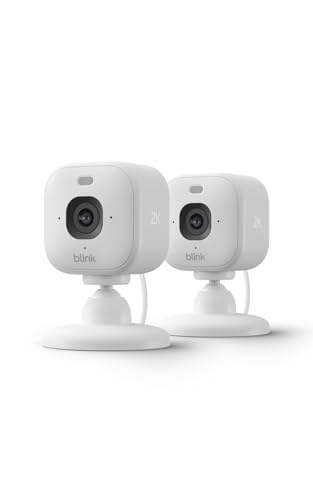
Blink Mini 2
A tiny, low-cost plug-in camera that pairs with a Sync Module for free local recording, ideal for keeping an eye on a pet or an entryway.
Good
- Very affordable
- Local storage with a Blink Sync Module 2
- Works with Alexa
Watch for
- Smart alerts and cloud clips need a Blink plan
- Indoor view only unless you add Blink's weather adapter

Blink Sync Module 2
The small hub that connects Blink cameras and saves clips to a USB drive you own, so you can skip the subscription.
Good
- Local clip storage on a USB drive
- Connects multiple Blink cameras
- Avoids a monthly subscription for saved clips
Watch for
- USB drive sold separately
- Some smart features still need a Blink plan
| Product | Best for | How it installs |
|---|---|---|
| Ring Indoor Cam (2nd Gen) | Best Ring camera for apartments | Sits on a shelf or wall plate with no drilling required; just plug it in. |
| Blink Mini 2 | Best budget camera | Freestanding plug-in camera; place it on a shelf facing the door. |
| Blink Sync Module 2 | Best for no monthly fee | Plugs into an outlet; add a USB flash drive for local clips. |
The Blink vs Ring subscription question decides what a camera really costs you over a lease. Blink is the better choice for most renters on a budget because a Blink camera can save clips locally with no subscription, while a Ring camera needs a Ring Home subscription to save any recordings. Both brands are owned by Amazon, both work with Alexa, and both sell plug-in cameras that never need a drill.
In this guide we break down what each subscription unlocks, what works for free, and which camera system I’d put in a one-bedroom apartment and why. If you need a camera on your front door specifically, start with our peephole camera guide.
Blink vs Ring subscription: the short answer
Choose Blink if you want to avoid a subscription entirely; choose Ring if you’re happy to pay for Ring Home in exchange for stronger features and an alarm system. If I were furnishing my own rental on a tight budget, I’d start with a Blink Mini 2 and a Sync Module 2 and only move to Ring if I wanted a monitored alarm.
Ring vs Blink side by side
Ring and Blink differ most on storage, subscriptions and system depth. Here is how the two compare on the points that matter in an apartment:
| Ring | Blink | |
|---|---|---|
| Owner | Amazon | Amazon |
| Save recordings without a plan | No (live view and alerts only) | Yes, with Sync Module 2 and a USB drive |
| Lineup | Broad: cams, doorbells, Ring Alarm | Smaller, budget-focused |
| Alarm with professional monitoring | Yes (Ring Alarm) | No |
| Battery cameras | Rechargeable packs | Long-life AA batteries on outdoor models |
| Works with Alexa | Yes | Yes |
What each subscription unlocks
A Ring Home subscription unlocks recordings themselves, while a Blink subscription mainly adds convenience on top of free local storage. That difference is why the Blink vs Ring subscription comparison isn’t apples to apples.
| Feature | Ring without a plan | Ring Home plan | Blink with Sync Module 2 (no plan) | Blink plan |
|---|---|---|---|---|
| Live view | Yes | Yes | Yes | Yes |
| Motion alerts | Yes | Yes | Yes | Yes |
| Save and review clips | No | Yes (cloud) | Yes (USB drive) | Yes (cloud) |
| Share clips | No | Yes | Yes, from local storage | Yes |
| Smarter alerts (people, packages) | No | Yes | Limited | Yes |
Before you subscribe to anything, we suggest running your cameras for two weeks on the free tier. If you never open old clips, you may not need a plan at all.
Subscriptions and local storage
The biggest practical difference between Ring and Blink is that Blink can record without a subscription, while Ring cannot. That one detail shapes the long-term cost more than the camera price does.
- Ring: without a Ring Home plan you still get live view and motion alerts, but you can’t save, review or share recordings.
- Blink: add a Blink Sync Module 2 and a USB drive, and clips save locally for free. A Blink plan adds cloud storage and smarter alerts if you want them.
We always tell renters to think about cost over the whole lease, not just the price on the box. A camera that needs a monthly plan keeps costing you every month, while a Sync Module and a USB drive are a one-time purchase that moves with you to your next apartment. On a 12-month lease, that difference adds up; on a two-year lease, it usually decides the winner.
There’s also a cancellation angle that renters appreciate: if you move to a building with its own cameras, a Blink setup can simply go in a drawer, while a Ring plan is one more subscription to remember to cancel.
Our picks for renters
Ring Indoor Cam (2nd Gen): best Ring camera for apartments
The Ring Indoor Cam (2nd Gen) is the Ring camera we’d choose for an apartment. The Ring Indoor Cam plugs into an outlet, has a manual privacy cover you can slide over the lens, and connects to Ring Alarm and Alexa. Remember that saving footage requires a Ring Home subscription.
Blink Mini 2: best budget camera
The Blink Mini 2 is the budget camera most renters should start with. The Blink Mini 2 is small enough to sit on a bookshelf, works with Alexa, and records locally once you add a Sync Module.
Blink Sync Module 2: best for no monthly fee
The Blink Sync Module 2 is the piece that makes Blink subscription-free. The Sync Module 2 connects your Blink cameras and saves clips to a USB flash drive that you own, which is exactly what we want for a portable apartment setup.
Which is better for an apartment?
For a typical apartment, Blink covers the basics for less, while Ring makes sense when you want an alarm or a doorbell on the same app. Our quick decision list:
- Watching a pet or the front door from inside? Blink Mini 2 with a Sync Module 2.
- Want a monitored alarm with door sensors? Ring, because Ring Alarm adds professional monitoring.
- Already own a Ring doorbell? Stay with Ring so everything lives in one app.
- Hate subscriptions? Blink, with local USB storage.
Whichever you choose, keep every camera inside your own unit unless your lease and building rules allow otherwise.
Privacy with roommates and neighbors
Indoor cameras in a shared apartment need clear ground rules, and both Ring and Blink give you tools to set them. We suggest these habits in any rental:
- Tell roommates where cameras are and give them access in the app.
- Turn cameras off or use Ring’s privacy cover when everyone is home.
- Point cameras away from shared walls, windows and neighbors’ doors.
- Use motion zones so hallways outside your door aren’t recorded constantly.
Moving your cameras to a new place
Ring and Blink cameras move with you in minutes: unplug them, set them up on the new Wi-Fi, and your account keeps your settings. On move-out day, we also recommend removing any adhesive mounts slowly, deleting old motion zones, and updating your home address in the app so alerts and schedules stay accurate. Our smart home for renters guide has a full move-out checklist.
Our verdict on Blink vs Ring subscriptions
Blink wins the subscription comparison for budget-minded renters because local storage is free; Ring Home is worth paying for when you want a complete, monitored security system. If you also want voice control, both work with Alexa, and our Alexa vs Google Home comparison explains which assistant to pair them with.
Questions renters ask
Is Ring or Blink better?
Ring is better for video features, a broader lineup and alarm integration. Blink is better for low cost and free local storage. For most renters who want simple indoor cameras, Blink is the better value; if you want a full security system, choose Ring.
Does Blink need a subscription?
No. With a Blink Sync Module 2 and a USB drive, Blink cameras can save clips locally without a plan. A Blink subscription adds cloud storage and smart alerts.
Can you use Ring without a subscription?
Yes, for live view and motion alerts. To save, review or share recordings, Ring requires a Ring Home subscription.
Are Ring and Blink the same company?
Both are owned by Amazon, but they are separate brands with separate apps, cameras and subscription plans. Both work with Alexa.
Which is better for renters?
Blink suits renters who want cheap, portable cameras without monthly fees. Ring suits renters who want an alarm system or plan to add a renter-friendly doorbell. Both offer plug-in and battery cameras that need no drilling.
Why you can trust this guide
- Products are checked against manufacturer specifications, installation manuals and long-term owner reports.
- Each pick is scored on our renter criteria: install footprint, reversibility, portability, subscription costs and ecosystem support.
- We never accept payment for placement. Affiliate commissions do not affect rankings.
Last reviewed . Read our research process and editorial policy, or report an error.
Sources

RenterSmartHome Editorial Team
Research & editorial
We research smart home gear specifically for apartments and rentals: how it installs, whether it is reversible, what it needs from your landlord, and whether it moves with you. Every guide follows our published research process and editorial policy.